Most companies don't have an AI problem. They have a capacity problem. Here is a precise answer — what AI Workers are, how they work, and why the distinction matters for your operations.
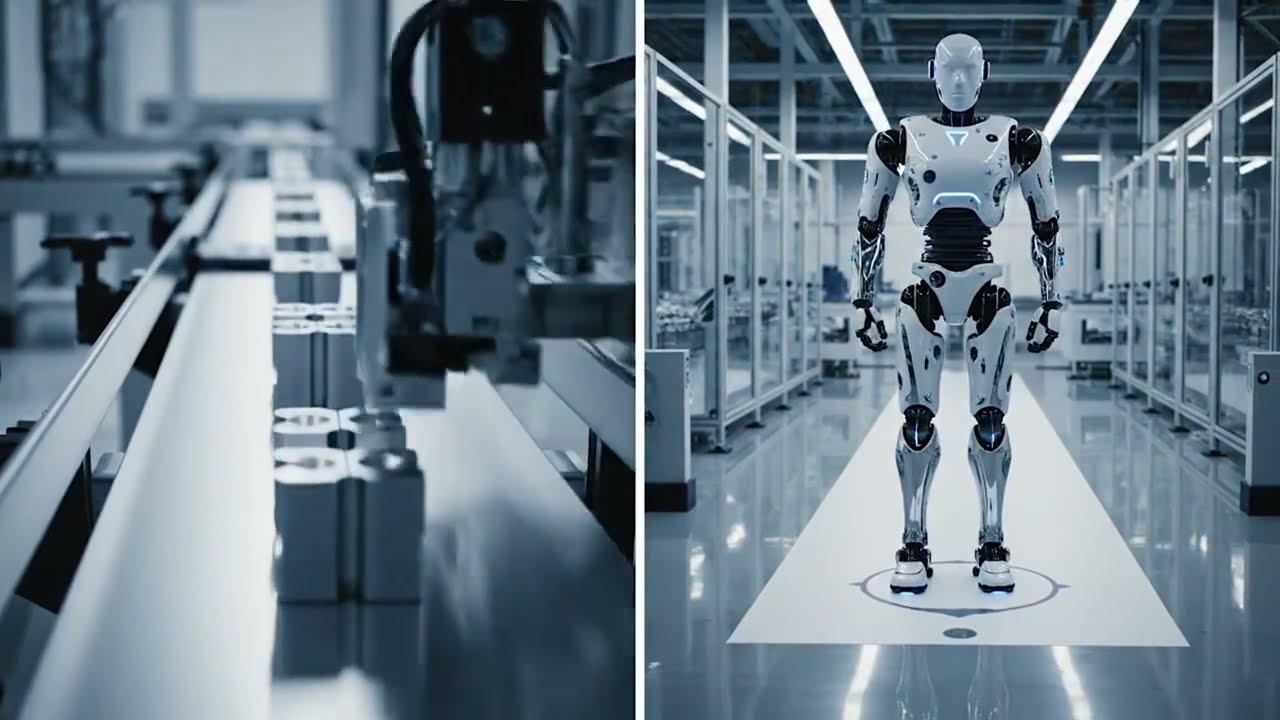
A complete walkthrough of what AI Workers are, how they're structured across four operational layers, and what distinguishes them from automation and agentic AI.
The real constraint isn't technology — it's execution. Your best people are buried in repetitive work. Processes depend on individuals. Scaling means adding overhead.
You don't need more dashboards.
You don't need another pilot project.
You need more execution capacity — without adding friction.
An AI Worker is a coordinated system of automation, AI models, business rules, and human oversight that performs a defined operational role inside your organization.
It performs real operational work — inside your existing systems — and produces measurable results.
Those are tools. An AI Worker is a role.
You'd define what they're responsible for, what systems they use, when they escalate, and how performance is measured. An AI Worker works exactly the same way — with the same structural clarity you'd give any new hire.
It doesn't just "assist." It executes. And when something falls outside its boundaries, it hands it to the right human — with context, not just a flag.
Inside your Microsoft ecosystem, an AI Worker is structured in four coordinated layers. Each serves a specific operational function. Together they create auditable, structured execution.
Traditional automation hits a ceiling when reality deviates. Agentic AI produces fragile demos. AI Workers take a third path — operational reliability with bounded intelligence.
| Dimension | Traditional Automation | Pure Agentic AI | AI Worker ✦ |
|---|---|---|---|
| Starts with | A task or a step | "What can the AI do?" | A defined operational role |
| Optimizes for | Task completion | Autonomy (less human = better) | Reliability + human oversight |
| Exception handling | Fails or halts | "The agent figures it out" | Structured escalation with full context |
| Auditability | Basic transaction logs | Difficult to trace or explain | Every action logged, every decision reviewable |
| Production readiness | High (narrow scope only) | Impressive demos, fragile in production | Built for production from day one |
| Scope | Rigid, predefined rules | Unbounded — the model decides | Bounded — defined inputs, outputs, escalation rules |
AI Workers convert fixed headcount cost growth into scalable digital capacity. Most deployments see full payback within 3–6 months.
An AI Worker is not autonomous. It does not replace leadership judgment. It operates inside defined boundaries — and it's more traceable than most manual processes.
The technology is not the hard part. The shift is moving from thinking about tasks to thinking about digital roles — that is the difference between using AI tools and building AI Workers.
No noise. No product updates. Just Philippe's read on where work is heading and what it means for how organizations need to operate.
Bi-weekly. Unsubscribe anytime.